Free · no sign-up · no email wall
Field notes
What is this?
The conclusion of every chapter in the series — 104 of them across ten volumes — in one table. It is the only place the whole argument is visible at once, and it is the table only this publisher could compile, because it comes out of the books rather than about them.
104 theses · 10 volumes · drawn from 341,678 words of published field guide
Every chapter, every volume
Volume 01 — Foraging
| Ch. | Chapter | What it comes down to |
|---|---|---|
| 1 | The Rule of Three Confirmations | Three confirmations, every plant, every time — the full shape matches, the environment fits, and you have affirmatively ruled out the deadly twin. Anything less isn’t identification. It’s a bet, and the house is a hedge. |
| 2 | Your City Is a Salad With Trust Issues | In the city, identification is only half the Rule — location is the other half. Three questions for every site: what was this land before, what do they spray, what’s uphill. No good answers, no harvest. And washing removes what fell on a plant, never what grew into it. |
| 3 | The Unkillable Five | Five plants — dandelion, plantain, chickweed, purslane, wood sorrel — chosen because they’re everywhere and their worst-case mistakes are survivable. Run the full Rule on all five until it’s muscle memory. Milky sap is evidence, not a verdict: it confirms a dandelion and condemns a spurge. Reps make the forager. |
| 4 | Trees: The Tall Food | The canopy is the only urban forage with real calories — one good oak out-feeds an acre of salad. Acorns are food after leaching, and taste is the only test that counts. Follow the mulberry stains, respect the walnut, and never brew “pine” tea from anything you haven’t three-confirmed — the yew is planted everywhere and forgives nothing. |
| 5 | Fruit of the Fence Line | Structure sets the stakes. Aggregate cane-berries can’t be faked — pick them with a clean site and a light heart. Grapes can be faked by a killer — tendrils and crescent-seed check, every cluster. Elderberry cooked and ripe only. And half the “landscaping” on your block is an orchard nobody labeled. |
| 6 | Mushrooms, Part One: Don’t | You are not learning mushrooms to eat them. You are learning four killers by sight so you can afford the question. The No List is the license; Chapter Seven is the vehicle; neither works alone. |
| 7 | Mushrooms, Part Two: Okay, These Four | Four species, four destructive checks: morels hollow and fused; chanterelles wear ridges, jacks wear blades; chicken’s ID includes the tree; puffballs sliced white-all-through, every time — that slice is what catches the Amanita button doing its impression. First specimen of each past a human expert. The knife confirms before it harvests. |
| 8 | The Law of the Land (You’re Standing on Someone’s) | There is no Law of Foraging — only a quilt of weird little rules, all findable in thirty minutes: city code, state parks, national forest (forests yes-ish, National Parks never). On private land, the door knock outperforms every statute. And above it all: never the first, never the last, never more than a third. |
| 9 | Keeping It: Preservation for People With One Shelf | The harvest arrives in floods on the plant’s schedule; preservation is how you answer. Dry what’s leafy, tray-freeze what’s precious, pickle and jelly inside the acid line — and leave everything low-acid to Book Three’s pressure canner. One shelf and seventy-two honest hours turn a glut into a pantry. |
| 10 | The Rest of the Mushroom Story | How you feel is not information — check, or don’t eat. And competence was never a scoreboard. It’s how you love the people who worry about you. |
Volume 02 — Water
| Ch. | Chapter | What it comes down to |
|---|---|---|
| 1 | The Math You’re Avoiding | One gallon per person per day is the floor, two weeks is the target, and water weighs 8.34 pounds per gallon — so a real supply is 14 gallons a head, planned by placement, bought for pennies, and stored before the day the whole city does its multiplication at once. |
| 2 | Storage Without Committing Crimes | Water storage fails at the container, so use only food-grade vessels — store-bought bottles and 5-gallon cans you can actually lift — sanitized, filled from the tap, dated, kept cool and dark and away from chemicals, and rotated every six months. The tap fills them for pennies; the only expensive part is doing it after you need it. |
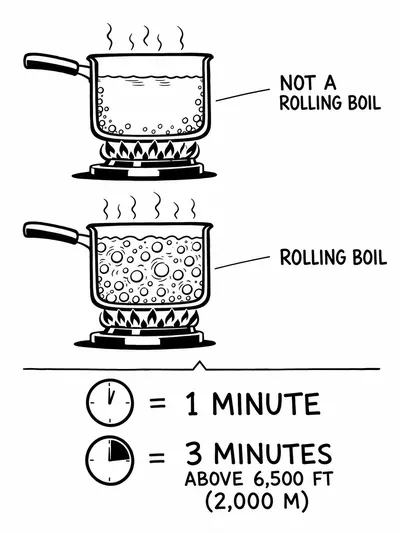
| 3 | Boiling: The Old God | A full rolling boil held for 1 timed minute — 3 minutes above 6,500 feet — kills every microbe class that makes emergency water dangerous, which makes boiling the most reliable purification there is; its only real costs are fuel and the absolute, non-negotiable rule that combustion stays outdoors. |
| 4 | Filters: The Membrane Priesthood | A filter is a hole with a number — 1 micron absolute takes the protozoa, 0.1–0.2 micron takes the bacteria, and almost nothing portable takes the viruses — so in a city, where bad water means sewage, a filter alone is half an answer: stack it with chemical or boil, or buy the purifier class that says “virus” in writing. And a filter that froze wet is dead and looks perfect. |
| 5 | Chemistry: Eight Drops of Civilization | A three-dollar dropper bottle of plain unscented bleach — 8 drops per gallon clear, 16 cloudy, stir, wait 30 minutes, smell chlorine or repeat once — is the lightest, cheapest, most scalable purification there is, kills the viruses your filter can’t, and fails only at Cryptosporidium and chemical contamination — gaps you cover with the boil and the filter, which is why the methods are a team and not a debate. |
| 6 | Steam and Sun: The Last Two Doors | Distillation is the only kitchen-scale method that removes salt, metals, and dissolved contamination — slow, fuel-hungry, and unbeatable in its lane (but no license to drink fuel-tainted water) — and UV needs nothing but clarity: a clear PET bottle, lying flat, in 6 hours of full sun (2 days if half-cloudy) disinfects for free. Ranked last, needed rarely, irreplaceable when their day comes — and the real skill is stacking all four methods to fit the day you actually get. |
| 7 | The Water Hiding in Your Home | Your home already stores its own emergency supply — 30 to 50 clean gallons in the water heater (breaker off FIRST, inlet closed, hot tap open, drain low, expect sediment), one to three more in every cleaner-free toilet TANK, gallons in the pipes between your highest faucet and lowest tap — call it fifty gallons of margin behind the winter coats, findable in ten minutes, if you meet your utility closet before the emergency does. |
| 8 | The City’s Hidden Reservoirs | The city stores water in the sky and on the roofs — a rooftop tank buys its building a day and booster-pump buildings get minutes, so ask your super the three questions this week; urban open water is sewage-adjacent flush-tier until fully stacked-and-treated; and one inch of rain on 1,000 square feet is 620 gallons, legal almost everywhere, regulated somewhere, and non-potable until treated — check your state before you buy the barrel. |
| 9 | The Advisory Protocol | An advisory is sequence, not crisis — read the actual tier, fill every vessel while pressure lasts, seal the heater and timestamp the ice, then run the numbers you now own (1 gal/person/day; rolling boil 1 minute, 3 at altitude; 8 drops per clear gallon, 16 cloudy, wait 30) until the lift — then flush the taps, dump the ice, change the cartridges, and debrief, because the advisory you just ran is the rehearsal for the one that counts. |
| 10 | The Winter the Well Went Quiet | The well was never mine — it was the grid’s, and the water that carried us was love on a rotation schedule. Store water for the people in your walls before they know to be afraid; the protocol you practice in calm weather is the sober you, showing up with counted drops on the night your hands shake. |
Volume 03 — Food Storage
| Ch. | Chapter | What it comes down to |
|---|---|---|
| 1 | Calories vs. Vibes | Your body eats calories, not variety — so audit your food in calories, not items. Pull it all out, sort into Calories / Nutrition / Flavor / Dead, add the calorie column, and divide by 2,000 to get your true “days of yourself.” Two weeks means 28,000 calories per person. Most people discover they own one to four days and a museum of sauces. You can’t fix a shortage you won’t count. |
| 2 | The Two-Week Baseline Larder | Two weeks of a person is 28,000 calories, and you can buy 30,000 of them — rice, beans, oats, pasta, oil, peanut butter, sugar, canned protein — for forty to sixty dollars, weighing about twenty pounds. Oil is the calorie king at ~4,000 per pound; rice and beans together are near-complete protein; white rice stores for decades and brown does not. Store it airtight, cool, and dark, defended against moisture, heat, and pests — and store food you’ll actually eat, or it dies on the shelf. |
| 3 | FIFO: Your Pantry Is a Nightclub | A larder dies of stagnation, not shortage. Run it like a nightclub: you’re the bouncer, oldest stock comes to the front rope and gets used first, new stock loads to the back, one-out-one-in keeps it full, and a dated index-card inventory is the guest list. Date everything the day it enters. “Best by” is a quality rumor — canned and dry goods last for years past it — but bulging, rusted, leaking, or off-smelling means discard, no tasting. |
| 4 | Rice Is Not a Diet | Calories keep you alive; nutrition keeps you functional. Rice alone fails slowly from several directions. Pair grain with legume for near-complete protein, store fat for satiety and the fat-soluble vitamins, hoard salt for function and morale, and back it all with a daily multivitamin — the highest-value ounce in your larder — to close the vitamin gaps that gave sailors scurvy. Store a little joy, too; morale is a nutrient. And medicine, infant needs, and pet food override every other number. |
| 5 | The Acid Line: Water-Bath Canning | pH 4.6 is the line. At or below it — most fruit, jams, pickles, and acidified tomatoes — food is high-acid, and the acid keeps botulism spores asleep, so a boiling-water bath preserves it safely for a year. Follow a tested recipe (NCHFP, USDA, extension, Ball) exactly: right headspace, new lids, full submersion, rolling boil, altitude-adjusted time, then check every seal. Tomatoes sit on the fence — always add bottled lemon juice or citric acid. Above the line is Chapter Six. |
| 6 | Botulism, in Cold Blood: Pressure Canning | Low-acid foods — all plain vegetables, meat, poultry, fish, and their mixtures — can grow botulinum toxin in a sealed jar, and that toxin is invisible, odorless, tasteless, and among the deadliest substances known. Boiling water (212°F) does not kill the spores; only a pressure canner reaching 240–250°F does. Pressure-can low-acid food only, by a tested recipe, in a real pressure canner, at the right pressure for your altitude, or do not can it at all. Never taste a suspect jar. No honey under one year. Botulism symptoms are a call-emergency-services emergency. |
| 7 | Dehydrating: Cheating Time by Removing the Water | Remove the water and food stops rotting — the oldest, cheapest, lowest-risk, highest-density preservation there is, and the cure for the crisper-drawer waste that plagues every city kitchen. Slice thin and even, dry fruit and veg around 135°F and herbs cooler, dry drier than you think, then condition in jars for a week and re-dry if you see condensation. Store airtight, cool, and dark. The one dangerous exception is meat: jerky must reach 160°F (poultry 165°F) — the dehydrator alone won’t do it, so heat before or after, or don’t make it. |
| 8 | The Root Cellar You Already Own | A root cellar is a set of conditions, not a place — and your apartment already has them. Cold-and-moist (32–40°F, humid: pack roots in damp sand) for carrots, beets, potatoes, cabbage, and apples; cool-and-dry (50–60°F, airy) for onions, garlic, and cured winter squash — and never mix the two. Find them in the north closet, under the bed, the unheated entry, the basement locker. Keep potatoes dark (green = solanine = discard), keep potatoes and onions apart, isolate the ethylene-gassing apples, cure squash and onions first, and cull the one bad apple weekly or lose the bin. |
| 9 | The Danger Zone: 40 to 140 | Bacteria multiply fastest between 40°F and 140°F — the Danger Zone. Keep cold food ≤40°F and hot food ≥140°F; fridge ≤40°F, freezer ≤0°F, and measure it with a cheap thermometer. Perishables survive two hours in the zone (one hour above 90°F), then they’re trash. In an outage: closed fridge ~4 hours, full freezer ~48, half-full ~24. Refreeze only food that still has ice crystals or stayed ≤40°F. Thaw in the fridge, cold water, or microwave — never the counter. Cook to tested internal temps (poultry 165°F, ground meat 160°F), not to color. When in doubt, throw it out. |
| 10 | Cooking With the Power Off | A larder is only as good as your ability to cook it with the power off. Eat in order — perishables, then the thawing freezer, then shelf-stable — and stock no-cook foods you can eat cold on day one. Ration fuel with one-pot meals, pre-soaked grains, fast-cooking lentils, and thermos cooking (boil two minutes, insulate, walk away). And the rule that outranks all of it: burning fuel makes carbon monoxide — cook outdoors or at a wide-open window, never a charcoal or gas appliance in a closed room. Book Four does fire in full; this is the part you can’t wait for. |
| 11 | THE SINCERITY: Enough to Share | A stocked pantry was never really about you surviving. It’s about having enough, and then extra — so that when the lean winter or the frightened neighbor comes, you can hand something over and make it feel like they did you the favor. Keep the shelf full for the people in the world, not against it. |
Volume 04 — Fire & Power
| Ch. | Chapter | What it comes down to |
|---|---|---|
| 1 | Fire Is a Supply Chain | Fire is a supply chain, not an event — a ladder of sizes where each rung must fully burn before the next is promoted. Ignition is 5% of the job; gathering and sorting tinder, kindling, and fuel BEFORE you strike is the other 95%. One match buys ten seconds: real tinder catches in three. |
| 2 | Ignition: Five Ways, With the Failure Rates Nobody Prints | Carry two lighters and learn the ferro rod anyway — the lighter is the best tool and the rod is the one still working when every lighter is dead. Slow heavy strokes, pull the rod not the striker, and feed sparks only the finest tinder (petroleum-jelly cotton balls burn 4–5 minutes). Try friction once to learn reverence. And store steel wool away from batteries — the fifth method works whether you meant it or not. |
| 3 | The Legal Fire | A legal fire is a defined thing — small, in a ring, 10 to 25 feet from anything that burns, under open sky, attended every minute, with water standing by. One call to your fire department’s non-emergency line gets your local rules; one 30-second check of burn bans and Red Flag Warnings clears every fire, every time. And a fire isn’t out until it’s drowned, stirred, drowned again, and COLD to the back of your hand — ashes hold live coals for days and go outside in metal, for a week. |
| 4 | The Gas That Isn’t There | Carbon monoxide is the gas that isn’t there — no color, no smell, no warning, produced by anything that burns, and it kills by suffocating you in a room full of air while disabling the brain you’d use to escape. Nothing that burns fuel runs indoors unless rated and vented for it; charcoal never, ovens are not furnaces, engines and generators outside only, 20+ feet, exhaust pointed away. And a UL-listed CO alarm with battery backup on every level and outside every sleeping area is not optional equipment. It is the only sense you have for this. |
| 5 | Heat One Room, Not the Home | Don’t heat the home — hold one small room: fewest windows, doors shut on everything else, windows quilted and filmed, drafts dammed, bedding insulated underneath. You are a 100-watt heater; a blanket fort captures what an open room wastes. A candle is 80 watts of fire risk, not a heat source — and space heaters get three feet of clearance, a wall outlet only, and get turned off when you sleep. |
| 6 | Your Walk-Up Is Flammable (and the Cord Under the Rug Knows It) | Your wiring is a system with a voice — tripping breakers, warm outlets, and burning smells are reports, not nuisances. Cords are temporary, visible, and rated (lower gauge = thicker); nothing lives under a rug, and heaters plug into walls only. Smoke alarms expire at ten years and go in every bedroom, outside sleeping areas, every level. And from alarm to unlivable can be two minutes — so the plan (two exits, one meeting point) gets made tonight, not then. |
| 7 | Blackout Protocol: The First Ten Minutes | A blackout’s first ten minutes are a checklist, not an experience: safe light, diagnose (you/building/block), report it, unplug electronics and leave one sentinel light on, seal the fridge, draw water if yours rides on power, set the climate plan, knock on the vulnerable neighbor’s door, start phone triage, sit down. Then trust the USDA clock: fridge 4 hours, full freezer 48, half-full 24, the line is 40°F — and when in doubt, throw it out. |
| 8 | Watt-Hours for the Innocent | The watt-hour is the only unit — battery bucket ÷ device drain = hours, and everything from power banks (a “10,000 mAh” bank is ~37 Wh: two to three phone charges, not four) to fridges (1–1.5 kWh a day) obeys it. Buy LiFePO4, store charged, top up quarterly — a battery stored dead dies for good. And a triaged phone (low power, screen dark, airplane when searching, one phone on duty, text don’t call) runs for days on the charge that reflex spends by midnight. |
| 9 | Fuel: The Part of the Book Written in a Fireproof Voice | Gasoline is a vapor hazard — heavier than air, always escaping, hunting pilot lights along the floor — so it lives ONLY in rated cans, small quantities, dated and rotated, in detached storage, never anywhere humans sleep, and in an apartment the correct amount is zero. Propane lives outdoors, all sizes, always. And the gentle fuels — dry wood off the floor, charcoal for outdoors, matches dry and high — turn the audit ritual you now own twice a year. |
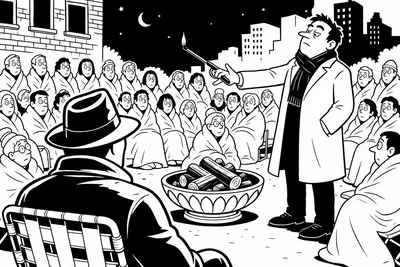
| 10 | THE SINCERITY: The Keeper of the Flame | Kneel next to them. Don’t take the thing — show, and wait, and let them light it. The skills were never yours; they’re the chain passing through you, and tending a fire for someone while they sleep is the oldest way our species has ever said what it means. Say it. |
Volume 05 — First Aid
| Ch. | Chapter | What it comes down to |
|---|---|---|
| 1 | The Autopsy of a First Aid Kit | A kit is built by jobs — stop bleeding, cover, clean, tools, paper — findable in sixty seconds in the dark, restocked the week it’s used, and grown no faster than your training. Anything else is a costume with a cross on the lid. |
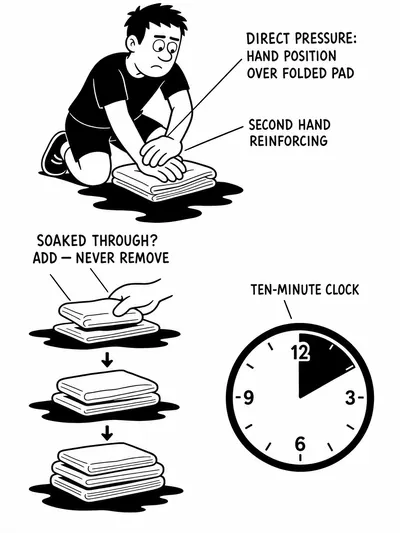
| 2 | Bleeding: The Red Chapter | Pressure, right on the wound, add-don’t-remove, ten minutes by a clock, no peeking — that’s the treatment, not the prelude to it. Spurting, pooling, or soaking through means 911 now, because for the first minutes the bystander IS the response. And a tourniquet is ninety minutes of training away — take Stop the Bleed and stop being a spectator to the worst five minutes. |
| 3 | Burns: The Folklore Autopsy | Cool running water, 10 to 20 minutes by the clock, is the treatment — never ice, never anything from the pantry. Jewelry off, cover loose and non-stick, blisters stay sealed, and the palm is 1%: bigger than a palm, full-thickness, face-hands-feet-joints, electrical, chemical, smoke, the very young or old — professionals, now. |
| 4 | Sprains, Breaks, and the Ankle That Lied | Deformity, open skin, or a pale-cold-numb limb is an emergency now. Can’t take four steps, bone tenderness, a pop, or any child’s “sprain” — get the picture the same day; a negative X-ray is the product, not a waste. For true sprains: protect briefly, move early and gently, ice about 20 minutes at a time for pain with a barrier, compress snug not throbbing, elevate — and give it weeks, not the weekend. |
| 5 | Choking: The Quietest Emergency | Real choking is silent — the cougher is winning, so encourage the cough and touch nothing; the silent one, hands at throat, maybe walking away, is the emergency: ask “are you choking?”, delegate 911 by name, and let trained hands work. The trained response — five-and-five, per the Red Cross — lives in a course, the course is one afternoon, and the brain’s clock is four minutes: shorter than any ambulance. |
| 6 | CPR: The Class You’re Going to Take | Unresponsive plus not-breathing-normally — and gasps count as not breathing — means call 911 on speaker, push hard and fast in the center of the chest, two inches, 100–120 a minute, full recoil, minimal pauses, and send someone for the AED, which you cannot use wrong by turning on. Hands-only is the floor that exists so nobody stands and watches; the full half-day course — children, infants, drowning, breaths — is the standard. Survival falls as much as ten percent a minute. Take the class. |
| 7 | Too Cold, Too Hot: The Body’s Narrow Country | Wet plus wind is the real cold math — water steals heat ~25 times faster than air — and the umbles are the thermometer; shivering that stops is a siren, and the severely cold get handled like glass, insulated at the trunk, and left to professionals. On the heat ladder, sweat and misery mean exhaustion — shade, cool, sips, thirty-minute clock — but a changed mind means heat stroke: 911 and aggressive cooling with everything wet and cold you own. In both directions, the victim doesn’t get a vote. Read the rungs for them. |
| 8 | The Medicine Cabinet: An Archaeology | The drugstore is six hundred products wearing a dozen molecules in trench coats — learn generic names, stock single-ingredient products by job, and never exceed a label ceiling summed across ALL sources, especially acetaminophen. No aspirin for children, ever. Label doses only, original containers, cool dark storage, twice-yearly sweep — and the pharmacist answers interaction questions for free. Ask. |
| 9 | The Bright Line: Go. I Am Begging You. | You are never required to diagnose — only to recognize the alarms and outsource fast: chest pressure with company, any BE-FAST sign even if it passes, anaphylaxis (epi first), labored breathing, head injury on blood thinners, thunderclap headache, rigid belly, first seizures, the sepsis pattern — 911, call-don’t-drive, location first. Urgent care is for today-problems, not tonight-killers. Wrong costs a copay; waiting can cost everything — and nobody competent has ever said “I wish they’d waited longer.” |
| 10 | THE SINCERITY: The Person the Room Turns To | The room always elects someone, and the elected are just the ones who decided in advance — a folding chair, a Saturday, a plastic torso — to be worth the turning heads. First aid is the one skill you learn almost entirely for other people, which means the class is a love letter you write years early to whoever ends up on the floor. Write it. She did. It’s why I’m here. |
Volume 06 — Hunting & Fishing
| Ch. | Chapter | What it comes down to |
|---|---|---|
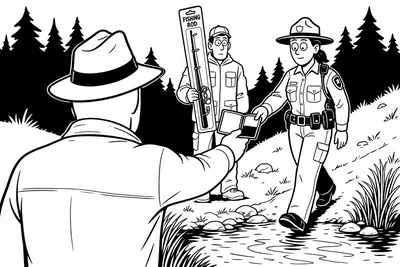
| 1 | Gear: The $80 Kit That Outfishes the $900 One | License first — it’s the only mandatory gear ($20–$40) and it funds the fish. Then $80 buys everything else that matters: a medium-light spinning combo, 8-lb mono, small long-shank hooks, split shot, a slender bobber, one card of jigs, pliers, clippers, a bucket, worms. The aisle is fishing for you. The worm is fishing for fish. |
| 2 | Reading Water: The Fish Has a Mortgage | Ninety percent of the fish hold in ten percent of the water — the edges: weed lines, docks, laydowns, drop-offs, and river seams where slow water meets the fast-water food conveyor. Fish face upstream; approach from behind; fish the edges of the day at the edges of the water, and scout five minutes with your eyes before one cast. |
| 3 | Catching Fish, or: The Honest Failure Rates | Zero fish for the first two or three trips is normal — the skills compound and then cross a threshold, so pay the tuition. One rig (size 8 hook, one split shot, slender bobber, half a worm, 2–3 feet deep on an edge), one knot, a brisk lift of a hookset, tight line, wet hands, and the twenty-minute rule will catch your first hundred fish. And 1-10-1 is the cold-water law: one minute, ten minutes, one hour. |
| 4 | The Fish Doesn’t Clean Itself: Kill, Clean, Cook | The moment a fish becomes dinner, dispatch it at once — one decisive blow — bleed it, and get it on real ice; the cold chain is yours alone. Clean it with the off-hand behind the edge, cook it to 145°F or opaque-and-flaking, no raw experiments without FDA freezing, and waste nothing — the middle of the process is what makes the meal honest. |
| 5 | Trapping: The Chapter That Is Mostly a Locked Door | Trapping is the oldest unattended machine in the food business, which is exactly why it’s the most regulated skill in this book: separate license, trapper education, dated seasons, mandatory check times (commonly 24 hours), tagged traps, and the Interstate Wildlife Violator Compact turning one state’s revocation into fifty. The path is license → course → association → mentor. Improvised snares are poaching with extra suffering; this book teaches none, ever. |
| 6 | What Hunting Actually Is (90% Walking, 9% Sitting, 1% Event) | Hunting is 90% walking, 9% sitting, 1% event — scouting and wind discipline are the sport, the shot is the paperwork. Your opponent smells you at hundreds of yards, sees 300 degrees of motion, and reads blaze orange as gray. Hunter education (state wildlife agency, free-to-$50, required nearly everywhere) is the non-negotiable first step, and the harness goes on before your boots leave the ground: falls, not firearms, are hunting’s #1 serious injury. |
| 7 | The Four Rules (Scripture, No Jokes) | Treat every firearm as loaded; never point the muzzle at anything you are not willing to destroy; finger off the trigger until sights are on target and the decision is made; know your target and what lies beyond it. The rules are redundant on purpose — all four must fail for tragedy — so all four are kept, always, by everyone, and storage (locked, unloaded, ammunition separate) is the fifth rule for every hour you’re not there. |
| 8 | Calibers Without the Forum Brain-Rot | A cartridge is case, primer, powder, bullet — and the decision is three questions: legal in your state and unit (rifle, shotgun/slug, or straight-wall — the regs decide before ballistics do), adequate for the animal (every mainstream deer cartridge is), and shootable by you — because recoil builds flinches and flinches lose deer. Adequate-and-practiced beats magnum-and-flinchy, your hunter-ed instructor and local shop beat any forum, and the zero gets confirmed before every season. |
| 9 | Shot Placement, Effective Range, and the Ethical Kill | One target — the heart-lung plate, 8–10 inches, behind the shoulder, lower half of the chest. Two shots — broadside and quartering-away; everything else is a pass. One number — your effective range, tested to every-shot-in-the-plate from field positions, written down and obeyed. Then mark, wait 30–45 minutes (hours if in doubt), and track to the end: recovery is the law in most states and the promise in all of them. |
| 10 | Field Dressing: The Temperature Clock Is Running | The clock starts at the fall: tag first, gloves on, gutted within the hour — two fingers under an edge-up blade, ring the vent, free the diaphragm, one long pull — then drain, prop, and drive for 40°F, quartering onto ice on warm days. Nothing from the gut touches the meat, bloodshot tissue gets trimmed wide, wanton waste is a statute, and the freezer is the last measure of respect. |
| 11 | THE SINCERITY: The First Deer | Taking a life to feed people is the oldest serious promise there is — thank you, we needed it, nothing will be wasted — and every procedure in this book is that promise translated into labor. The weight you feel over the animal isn’t the flaw in the hunt. It’s the proof you’re keeping the terms. |
Volume 07 — Comms & Electronics
| Ch. | Chapter | What it comes down to |
|---|---|---|
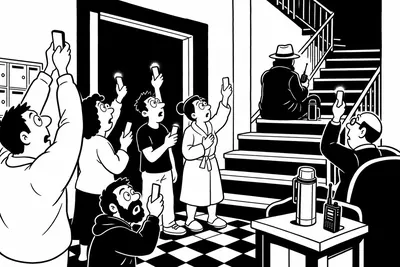
| 1 | The Tower Is a Building on a Battery | The cell network dies early and on schedule — congestion in minutes, tower batteries in hours (commonly two to eight), rescue towers in days. In the gap: text don’t call, one designated contact, Wi-Fi calling on, airplane-mode discipline, and 911 kept sacred. |
| 2 | PACE Yourself: The Family Plan That Isn’t a Billing Term | Build the PACE plan — text-first Primary, out-of-area Alternate as the family switchboard, radio Contingency with fixed check-in windows, physical Emergency rally points and notes — put it on wallet cards, memorize three numbers, and drill it twice a year until it’s a bit. |
| 3 | Walkie-Talkies Without the Marketing | FRS is license-free and honest at a half mile to two miles — own a charged pair. GMRS is the family’s real network: $35, ten years, no test, covers the household, real antennas and repeater range. MURS is the quiet VHF sleeper for fixed and rural use. And “36 miles” is a mermaid. |
| 4 | The License: 35 Questions Between You and the Endgame | The Technician exam is 35 multiple-choice questions, 26 to pass, drawn from a free public question pool — a take-home you’re allowed to memorize. About $50 all-in for ten years, no Morse required, passable in a weekend of free practice exams. A teenager does it between soccer games; you went to grad school. Go. |
| 5 | Your First Radio (and the Penthouse Gossip) | First radio: the $25 handheld if the price is what gets you started, the $100 one if you already know you’ll stay. Program it by cable and software with every local repeater — offset and tone — BEFORE the emergency. The repeater is the penthouse gossip on emergency power: whisper to her, she shouts to the county. And spend your next $20 on the antenna, not the radio. |
| 6 | Keying Up: First Contact Without Dying of Stage Fright | Listen first, then key up and say “[callsign], monitoring” — the exchange is just names, signal reports, and welcome; ID every 10 minutes and at the end; phonetics are armor; 146.52 simplex is the knock-on-any-door channel. Then find your Tuesday net and check in weekly: a net is a drill that doesn’t know it’s a drill, and attendance is the skill. |
| 7 | The Listening Layer | Build the listening layer: a $30 NOAA weather radio with your county’s SAME code and battery backup (the one purchase this book insists on), a scanner sized to your county’s actual systems, and a $40 shortwave set for when the horizon is the only network left. Receiving is legal, free, and unkillable. Transmitting takes the license — and the license takes a weekend. |
| 8 | Watts and Hours: Keeping the Rectangle Alive | Watts are the spending rate, watt-hours the account: a phone is only 10–15 Wh, a 10,000 mAh bank is ~2 real charges, and a “100 W” panel honestly aimed pays 50–70 W in full sun — 250–400 Wh a day. Budget loads first, then storage, then panels; charge USB from USB; fund medical devices first; and obey the lithium rules like the fire code they are. |
| 9 | The Mesh and the Paper | Build the two towerless layers: a license-free LoRa mesh node per household — rooftop nodes, shared channel, block-scale texts that hop past any outage — and the paper spine: contact sheets in every wallet, three numbers memorized cold, a waterproof document sleeve with an encrypted USB twin, printed maps and routes, small bills, and one print-day a year. The heart emoji does not store digits. |
| 10 | EMP: The Physics and the Fan-Fiction | Solar storms are real, grid-scale, and forecast days ahead (Carrington 1859, Québec’s 90-second collapse in 1989 — bookmark NOAA’s SWPC); they threaten long wires, not your pocket. HEMP is real physics whose scenario makes your gadgets a footnote. Prepare for the near-certain outages first — the same stack covers every tail — and if you want a Faraday hedge, it’s a $25 trash can, not a $400 duffel. |
| 11 | THE SINCERITY: Five Nine | The payload was never information. It’s the carrier — a fixed hour, a kept frequency, a station that answers. Build the skills so that when somebody you love sends NOT OK, at whatever speed they can afford, you copy all of it — and they are always, always five nine at your end. |
Volume 08 — Engines & Transport
| Ch. | Chapter | What it comes down to |
|---|---|---|
| 1 | The Walkaround: Five Minutes Between You and the Shoulder | Five minutes, once a week, same orbit every time — tires to the door-jamb number, fluids read like instruments, belt, battery, lights. The car always confesses before it fails. Your only job is to attend the confession. |
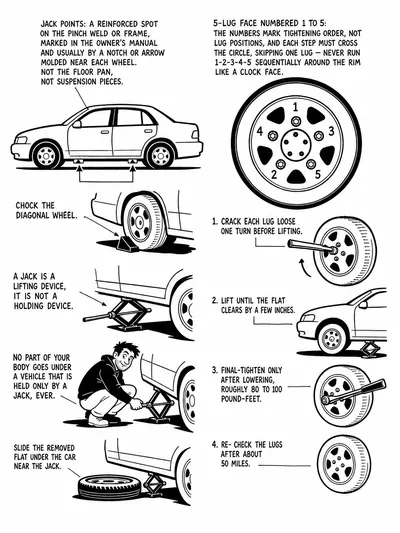
| 2 | The Tire: Changing It Without an App or an Audience | Flat ground before anything, lugs cracked before lifting, spare snugged in a star, torqued after lowering, re-checked at 50 miles — and no part of you, ever, under a car held only by a jack. Rehearse it once in a driveway and a flat becomes a chore instead of an event. |
| 3 | The Battery: Dead Is a Diagnosis, Not a Personality | Batteries die in August and confess in January — test at year three, replace by year four, on your schedule. And the jump order is one idea in four steps: dead positive, live positive, live negative, engine-block ground — because the last clamp always sparks, and the spark must happen nowhere near the hydrogen. |
| 4 | That Light Has Been On Since 2024 | Steady light = a memo — read the code this week with your own $25 reader. Flashing light = an active misfire cooking your catalytic converter — reduce load and get help today. The code is a case number, not a curse; the diagnostic fee is for wisdom, not for the eleven seconds of reading you can do yourself. |
| 5 | The Crisis Car and the Half-Tank Religion | Below half is empty — pumps need power, lines eat hours, and evacuation math starts at your current needle. A crisis car is an ordinary car that starts, stops, sits above half, and carries one boring bag you check on the clock-change weekends. |
| 6 | Generators, At Last | Size for the triage list — sum the running watts, add the single largest surge, buy 20 percent over — duty-cycle the runtime, stabilize and rotate the fuel, and site the machine like lives depend on the tape measure, because they do: outdoors only, 20-plus feet out, exhaust away, CO alarms on every sleeping level. |
| 7 | Small Engines Die of the Same Three Things | Every small engine dies of stale fuel, dirty air, or neglected oil — stabilize every can, run machines dry for storage, check the filter, change oil every 25–50 hours. The saw gets chaps, helmet, a working chain brake, and a course before the storm. And the fuel reserve you can actually siphon is the one you stored in cans. |
| 8 | Evacuation: The Day the Road Becomes a Parking Lot | Evacuation is won or lost days early — set your go/no-go trigger in calm weather, leave before the rush or shelter well on purpose, carry two paper routes and a tank above half, and never put a wheel into water on a road: twelve inches floats a car, and the road underneath may already be gone. |
| 9 | The Cockroach and the Appliance: Bicycles and EVs | The bicycle is the vehicle the crisis can’t touch — no fuel, no plates, no gridlock, 100 pounds on a trailer, thirty seconds of ABC — and the EV is neither savior nor scam: full-from-home and gridlock-proof, but grid-dependent and queue-prone. Plan any vehicle’s crisis range at 60–70 percent of the sticker, and remember the only powertrain that fails every scenario: the empty one. |
| 10 | Why The Truck Starts | Machines fail gradually, invisibly, and then suddenly — and maintenance is simply being present for the gradual part. It is a promise made with a rag to people who aren’t there yet. Keep it weekly. The person who checks the oil is the person who meant it. |
Volume 09 — Defense & Shelter
| Ch. | Chapter | What it comes down to |
|---|---|---|
| 1 | Awareness: The Head-Up Discount | Most street crime starts with an interview you can fail on purpose — head up, phone away at every transition, one earbud max, and let the baseline make anomalies loud. Awareness buys distance; distance buys everything else. |
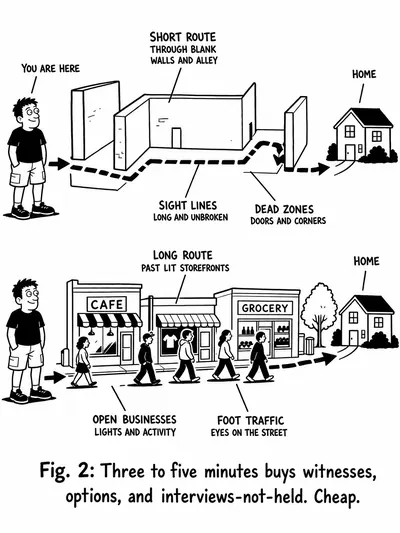
| 2 | Avoidance: The Best Fight Is Elsewhere | Risk lives where late hours, dark empty routes, and impaired condition intersect — and all three are dials you set in advance. Decide at 2 p.m. what you’ll do at 2 a.m.; leave early; take the lit long way. Avoidance works silently or not at all, and silence is the win. |
| 3 | De-escalation: Losing the Argument on Purpose | Social conflict runs on ego, and it takes two actors — so refuse your lines. Voice low and slow, agree cheaply, hands up and open, give him a door, name your exit, and leave without the parting shot. Walking away isn’t the consolation prize; it’s the win. |
| 4 | Hardening: Your Door Is Lying to You | Most doors fail at the frame, not the lock — and $80 of screws, box strike, and reinforcement beats $2,000 of doorbell. Three-inch screws to the stud, Grade 1 deadbolt with a 1-inch throw, rod in the slider, lights on the approaches, and the dog only if you’ll love the dog. Cameras witness; frames argue. |
| 5 | The Law: A Map, Not Advice | Self-defense law is four elements everywhere — imminence, proportionality, innocence, reasonableness — with retreat, stand-your-ground, and castle rules varying wildly by state. Deadly force never defends mere property, the aftermath is part of the fight, and the only competent legal advice in this book is: know YOUR state, and buy one hour with a real lawyer, now, before. |
| 6 | Tools, Last: The Chapter You Skipped Ahead To | Every tool passes one gate — lawful, trained-with, stored safely — or stays in the store. Pepper spray (gel, carried in reach, replaced every 3–4 years) is the underrated civilian answer; the flashlight and the alarm punch above their weight; and a firearm is the Four Rules, professional training, a locked safe, and your local law, or it is nothing at all. |
| 7 | Stay or Go: The Bug-Out Chapter | Staying is usually right — a provisioned home (two weeks food and water, heat, light, radio, meds, documents) beats the road in almost every real disruption. Leave only for hazards with a vector — fire, flood, surge, chemical, mandatory orders — and apply the test: destination + route + reason = evacuation. Missing any one, it’s camping, badly. |
| 8 | The Go-Bag That Isn’t Cosplay | A go-bag has one job — you, safely, to a real destination for 1–3 days — and one enemy: weight. Fifteen to twenty pounds, boring bag, built on meds, documents, glasses, cash, water treatment, no-cook calories, light, radio, and walkable shoes. Then the mile test, staged by the door, checked when the clocks change. Pills and paper outrank every piece of gear ever sold. |
| 9 | Leaving Early: Evacuation for the Disasters That Actually Happen | The real disasters are fires, floods, and storms, and they all trade time for survival at the same rate — best at the start. Alerts layered, zones known, triggers written in advance, tank half full, and the entire secret in two words: leave early. Six inches of moving water takes your feet; twelve floats your car; two minutes empties a burning house. Early beats right, every single time. |
| 10 | The Plan: Routes, Meetups, the Folder, and Drills That Aren’t Weird | The plan is one page: two driving routes in different directions plus one on foot, three meetup tiers (near for fires, mid for blocks, far with a confirmed destination), an out-of-area text switchboard on paper in every pocket, and the Folder — identity, insurance, meds, keys, cash, USB. Practice it twice a year, announced, timed, ending in pizza. Boring at the mailbox is victory. |
| 11 | The Door at Doreen’s House | Everything this book taught — the door, the plan, the folder, the drill — is one sentence in the end: I thought about the worst night of your life before it happened, because I love you. Say it in words if you can. Say it in hardware regardless. It keeps saying itself long after you’ve gone home. |
Volume 10 — Community
| Ch. | Chapter | What it comes down to |
|---|---|---|
| 1 | The Lone Wolf Is a Myth Sold to Lonely Men | One person cannot stand a watch, lift a barrel, stitch their own hand, or notice their own absence — the full survival skill set has never fit inside one skull, and the disaster data says connection beats gear at ten-to-one odds. Prepare like a lone wolf. Then don’t be one. |
| 2 | The Census of Quiet Competence | Your block already contains a response team — it just has no catalog. Build one: three lists (skills, tools, needs), ten households, opt-in only, two named keepers, pencil. And the potluck comes before the spreadsheet, always — trust is not collected on a form. |
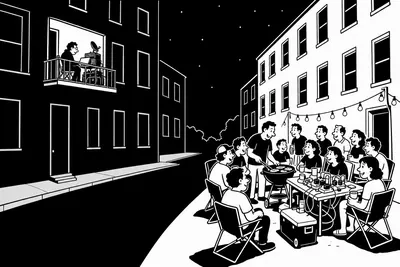
| 3 | The Potluck Is Infrastructure | Organize like a mushroom club, not an HOA: monthly cadence, 8–12 core households, rotating hosts, one list, no treasury, no titles, no bylaws — and treat the shared meal as the oldest trust protocol humans run. A block that eats together twelve times a year has drilled twelve times without noticing. |
| 4 | The Texting Tree and Other Nervous Systems | Build the block’s comms in four layers — a three-channel group chat (keep URGENT sacred), a texting tree where everyone owns three contacts (40 households in three steps, and the tree accounts for who’s missing), a corkboard that can’t crash, and one licensed radio operator. Then drill it once: the point of the drill is finding the dead numbers early. |
| 5 | The Quiet Emergencies | Heat is America’s deadliest weather, and it hunts a knowable profile: elders, alone, upper floors, no AC, certain medications. The counter-weapon is a list and a twice-daily knock with eyes on the person — because heat stroke’s first symptom is being sure you’re fine. Confusion or ~103°F = 911, cool aggressively, nothing by mouth if altered. |
| 6 | After the Storm: The Generator Commons | After the storm, pool everything: one sited generator (outdoors, 20+ feet out, exhaust away — CO kills more people than the storm) on a posted schedule; one full managed freezer (48 hours unopened; 40°F/2-hour discard rule; when in doubt, throw it out); one table with no clipboard. And never self-deploy to someone else’s disaster — register with CERT before the next one, and check your own list first. |
| 7 | The Skills Economy | In a disruption, value flows through consumables, tools, information, and above all skills — divisible, unstealable, self-advertising — and every trade settles in trust, the one currency you cannot mint during the event. Gold chews poorly and divides worse. Stock a ten-dollar barter box, join the tool library, and make sure your own census row lists something callable. |
| 8 | Every Book at the Table | A skill unshared is a hobby; shared, it’s infrastructure. Walk the shelf and file yourself: land knowledge, water, larder, power doctrine, medical tier, patience and protein, comms, motor pool, the door that holds — every book you’ve read is a seat at a table that doesn’t exist until you sit down at it. Bring a dish. Bring the skill. Same instruction. |
| 9 | The Gerald Accords | Every block has a Gerald, and almost none of them are at war with you — the free rider, the hoarder, the clipboard, and the paranoid are each sending invoices in a notation you haven’t learned to read. Feed the station, bound the clipboard, invite without auditing, keep the door ajar — and remember the exchange rate: the war costs twenty years; the table costs a Saturday. |
| 10 | THE SINCERITY: The Door Knock | This one doesn’t get a takeaway box. It gets Tuesday. |
Questions this table gets asked
Why publish the summary of every chapter free?
Because the hard part of selling a funny book is convincing anyone the manual inside it is real, and showing that is faster than arguing it. A one-line thesis tells you what a chapter concludes; it does not tell you why the number is the number, what happens when people ignore it, or who found out the hard way. That is the other 341,678 words.
What is the rule behind the table?
Every chapter walks the same ladder: contempt, instruction, brake, sincerity. It opens on somebody confidently mid-mistake, the jokes thin as the stakes rise, and where an error maims or kills the comedy stops mid-paragraph and the prose goes flat and procedural. The last chapter of each volume drops the mask once. Read the column and you can see the ladder in the phrasing.
Which volume should someone start with?
Water, volume 2, on the series' own advice: the arithmetic is the most immediately useful thing in the ten books and the least pleasant to discover late. Nothing requires reading in order — the numbering is so the spines line up, not so the argument builds.
Is any of this actually checkable?
The identification rule, the storage maths, the dose tables and the temperatures are, and they name their authorities where they have them — FEMA, CDC and the Red Cross on water; USDA on refrigeration; the National Center for Home Food Preservation on canning. The narrator is fictional. The numbers are not.
Can I quote these pages?
Yes, with attribution to the volume named on the page. The appendix each card comes from opens by telling the reader to photocopy it freely, which is the licence the books themselves grant. Please quote the figures as written rather than paraphrasing them.
The cards themselves
Each volume page carries that book’s own reference cards in full — the storage calculator, the purification doses, the danger-zone temperatures, the four firearm rules, the jump-start sequence. They are on the volume pages rather than here because a card is only useful next to the book it came from.
- Vol. 01 — ForagingIs it safe to forage for food in a city?
- Vol. 02 — WaterHow much water should I store per person?
- Vol. 03 — Food StorageWhat should a two-week emergency food supply contain?
- Vol. 04 — Fire & PowerWhat should you do first in a power outage?
- Vol. 05 — First AidWhat should a home first aid kit contain?
- Vol. 06 — Hunting & FishingHow do I start hunting or fishing legally?
- Vol. 07 — Comms & ElectronicsWhat radio should I get for emergencies?
- Vol. 08 — Engines & TransportWhat should I check on my car every week?
- Vol. 09 — Defense & ShelterHow do I make a door harder to kick in?
- Vol. 10 — CommunityHow do you organise neighbours before an emergency?
This page is a reference, not an authority. It is field-guide material, not medical, legal, electrical or structural advice, and nothing on it replaces emergency services, a physician, a licensed tradesperson, or the law where you live.
No plant is edible on the say-so of a web page. In a real emergency the first instruction is to call for help. Local code outranks any page here.
Dr. Buck Savage is a fictional narrator and is not a doctor. The reference material is real and is drawn from the published books; the man is not.